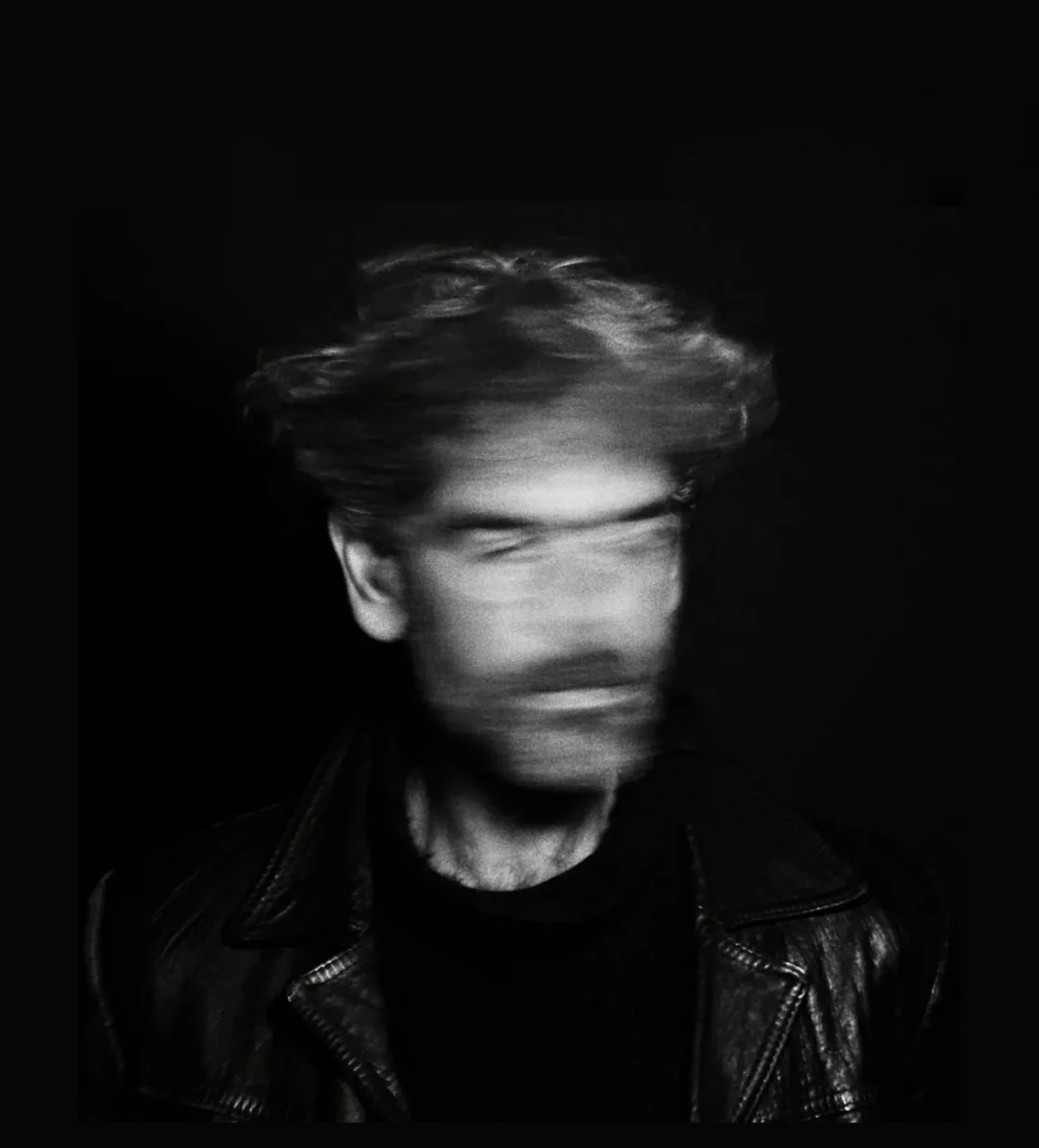
Image by Sevil Alkan & İlknur Can
Review by: Blake Zhang
Rating: ★★★
As its title suggests, Dünyada, meaning ‘in the world’, is not a one-person show driven by a conventional narrative. Instead, it creates its world through live camera, projection, lighting and sound. Directed and performed by Mehmet Ali Nuroğlu, the production is most impressive when these elements work together.
The live camera is at the heart of the performance. Nuroğlu uses different angles, overlapping images and lighting to constantly change what appears on the screen behind him. The images often make the performer appear more than once, creating a strange sense of doubling, as if we are watching him through a stream of fragmented memories. There is a feeling of being drawn into these memories and losing track of where we are. Later, when the character says, ‘don’t get lost too long’, the earlier use of the camera takes on another meaning. The camera is not simply recording what happens on stage. It becomes part of the way the character’s world is created.
The ideas behind the live camera do not stop there. Nuroğlu and the team make clever use of the theatre space and the things around him to create new images. One of the most memorable moments comes when he points the camera at the projector lens while talking about snow. The dust floating in front of the lens suddenly looks like falling snow. It is a simple trick, but very effective. Above all, Nuroğlu also operates the camera and the live technical elements while performing, moving between these roles with remarkable calm.
The sound works closely with this visual language. Composer Çağrı Sinci’s soundtrack is one of the strongest parts of the production, while Nuroğlu creates other sounds live. He uses a foot-operated effect to repeat his own lines, and turns pieces of paper and a branch into the sounds of a storm. These simple sounds become part of the performance rather than simply supporting it.
Dünyada is based on Will Eno’s 2012 monologue Title and Deed. The central character is a nameless, displaced traveller. In this Camden Fringe production, his journey seems to bring him directly into this theatre and in front of this audience. The audience therefore becomes more than a group of people watching from outside the story.
However, the use of the camera on the audience was more complicated. The live images look almost cinematic, so when another audience member first appears on the screen, the effect is genuinely impressive. Nuroğlu gives different audience members names and roles such as Melissa, father and mother, turning them into temporary characters in his world. At first, this feels playful and surprising. However, as the camera returns to the audience again and again, the effect becomes less fresh and more intrusive. I found myself paying more attention to the people being filmed than to what was happening on stage, and some of the people on screen did not look entirely comfortable either.
There is also a question about how much audience participation is needed. The show’s website includes a content warning about audience participation, although I did not see one at the venue. With the audience seated on three sides, there is also little opportunity to avoid being filmed. The idea of making the audience part of the show is interesting, but the amount of time spent on individual audience members could perhaps have been handled with a little more care.
That said, the ending takes the concept a step further in a thoughtful way. Nuroğlu plays footage he filmed outside the theatre before the show, as well as recordings of the audience arriving and taking their seats. After watching the audience become part of the performance throughout the show, seeing them appear again in this footage makes their presence feel like another part of the work. It is a fitting ending for a performance that keeps questioning the boundary between the performer, the audience and the space they share.
Overall, there is a lot to admire in Dünyada, particularly Nuroğlu’s control of the camera and the strong combination of sound and visuals. It is inventive and visually memorable, and offers a distinctive experience of live performance and technology.