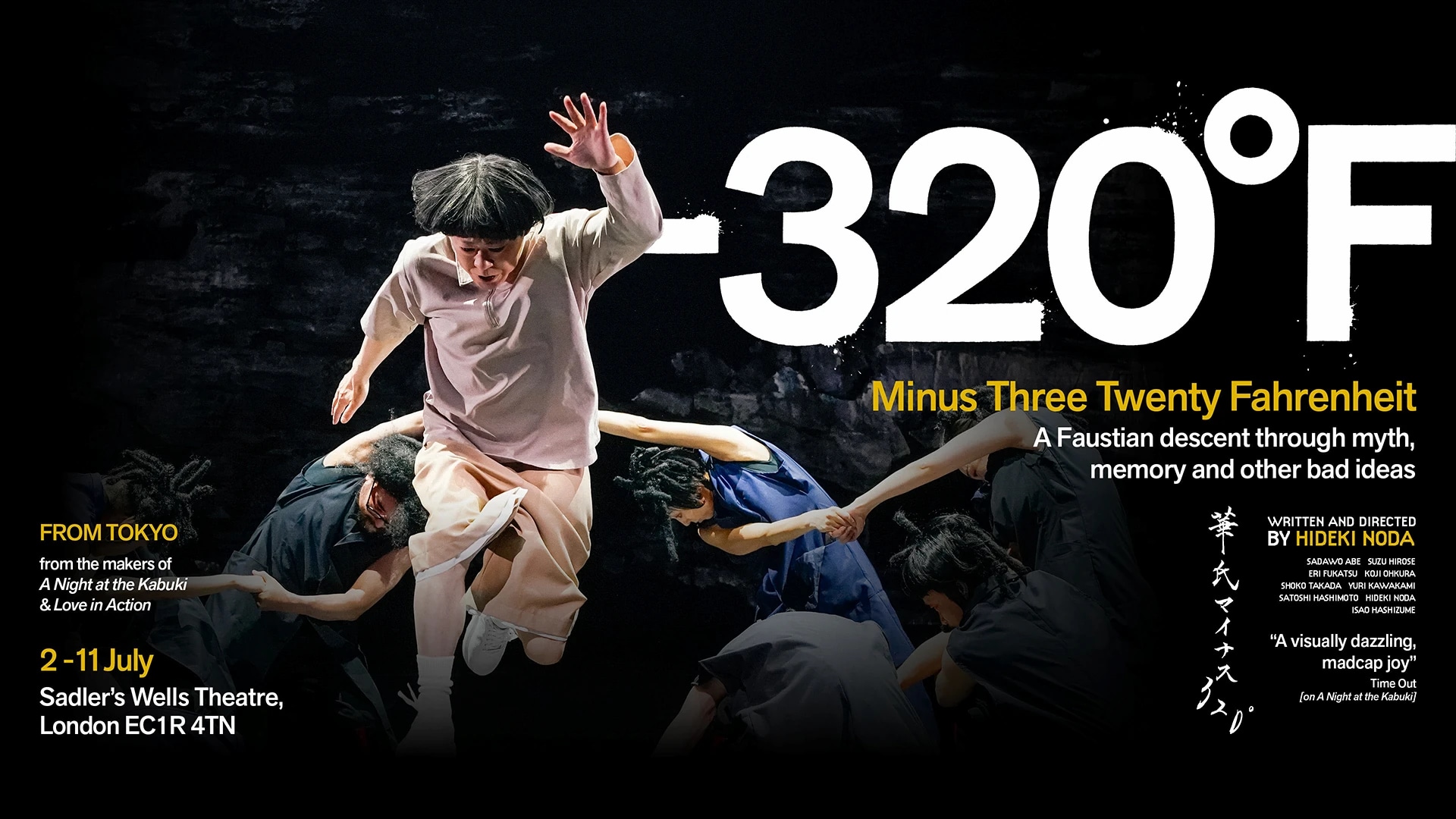
Image by Takashi-Okamoto
Review by: Flynn Ng
Rating: ★★★
Hideki Noda has made it an annual tradition to bring his groundbreaking theater to London. This year, NODA MAP returns with -320°F. The production highlights Noda’s talent for pastiche, where he blends historical facts with fantasy and myths from different cultures and eras.
The story is a Faustian epic. The main character, named HELP, travels through ancient times, medieval times, and modern times. Guided by the vibrations of an ‘angel bone’, HELP tries to assist Professor Kyuri in her search for the ‘ultimate human’. Along the way, Noda brings in elements of Faust, Mephisto, the Pied Piper of Hamelin, Cleopatra, and the Tower of Babel. At the same time, the play references Noda’s own past works, such as A Night at the Kabuki, Love in Action, Egg, and beyond.
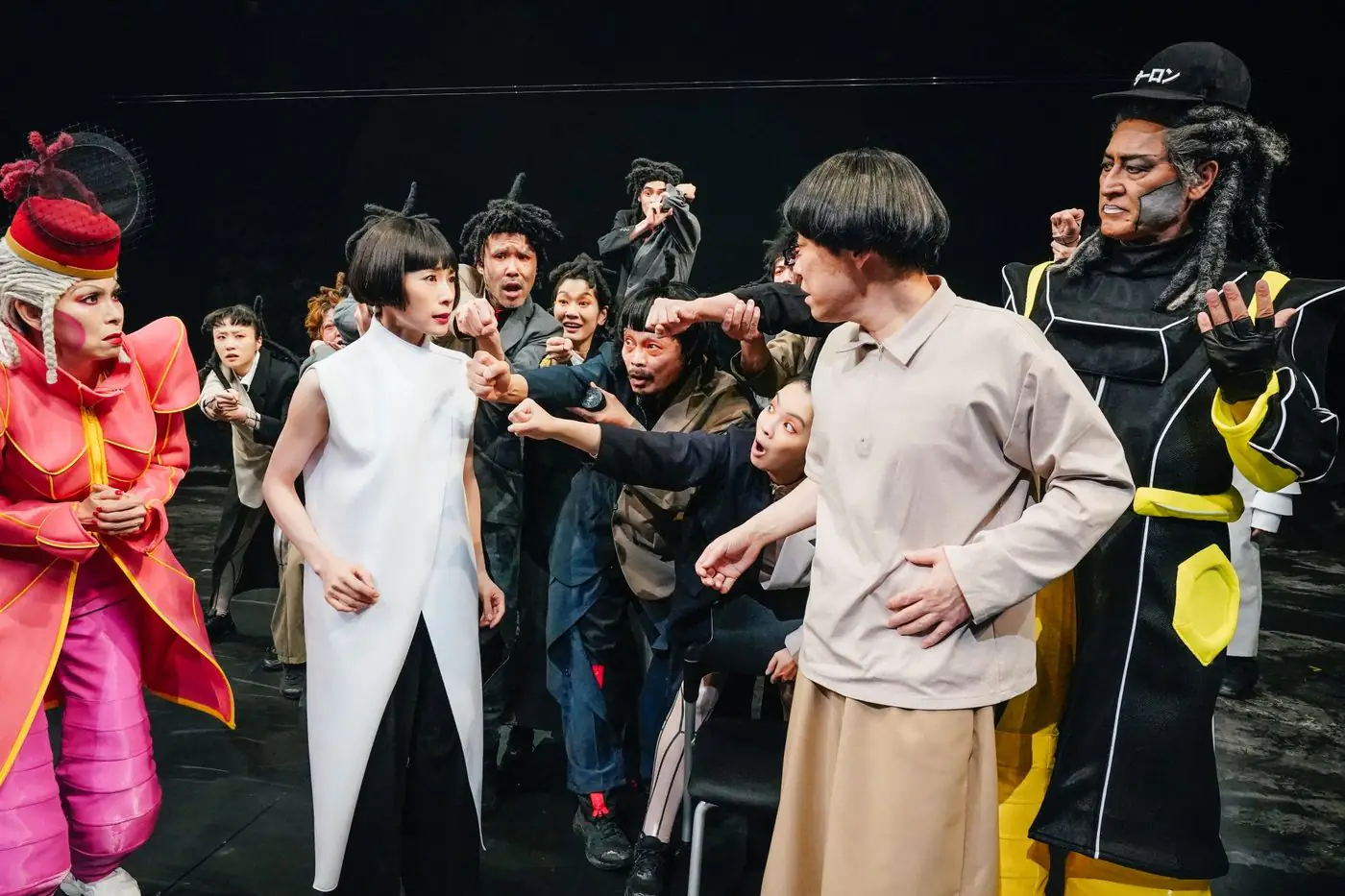
In the program notes, Noda shares that this story is connected to the Sagamihara disabled care home (Yamayuri-en) killings in Japan ten years ago. The killer was a former employee who committed terrible crimes based on eugenics. For the audience, this real-world tragedy easily brings to mind the horrors of Nazi Germany. It also recalls Japan’s wartime atrocities and biological experiments on Chinese soil, which Noda previously explored in his play Egg.
The cast is full of famous stars, including Sadawo Abe, Suzu Hirose, Eri Fukatsu, and the director himself. The show runs for nearly two and a half hours without an intermission. During this high-intensity performance, the actors show incredible energy through fast lines, symbolic choreography, and strong emotional outbursts. However, this non-stop pacing can feel very overwhelming. The massive amount of information moves too fast, giving the audience no time to breathe and creating a sense of sensory overload.
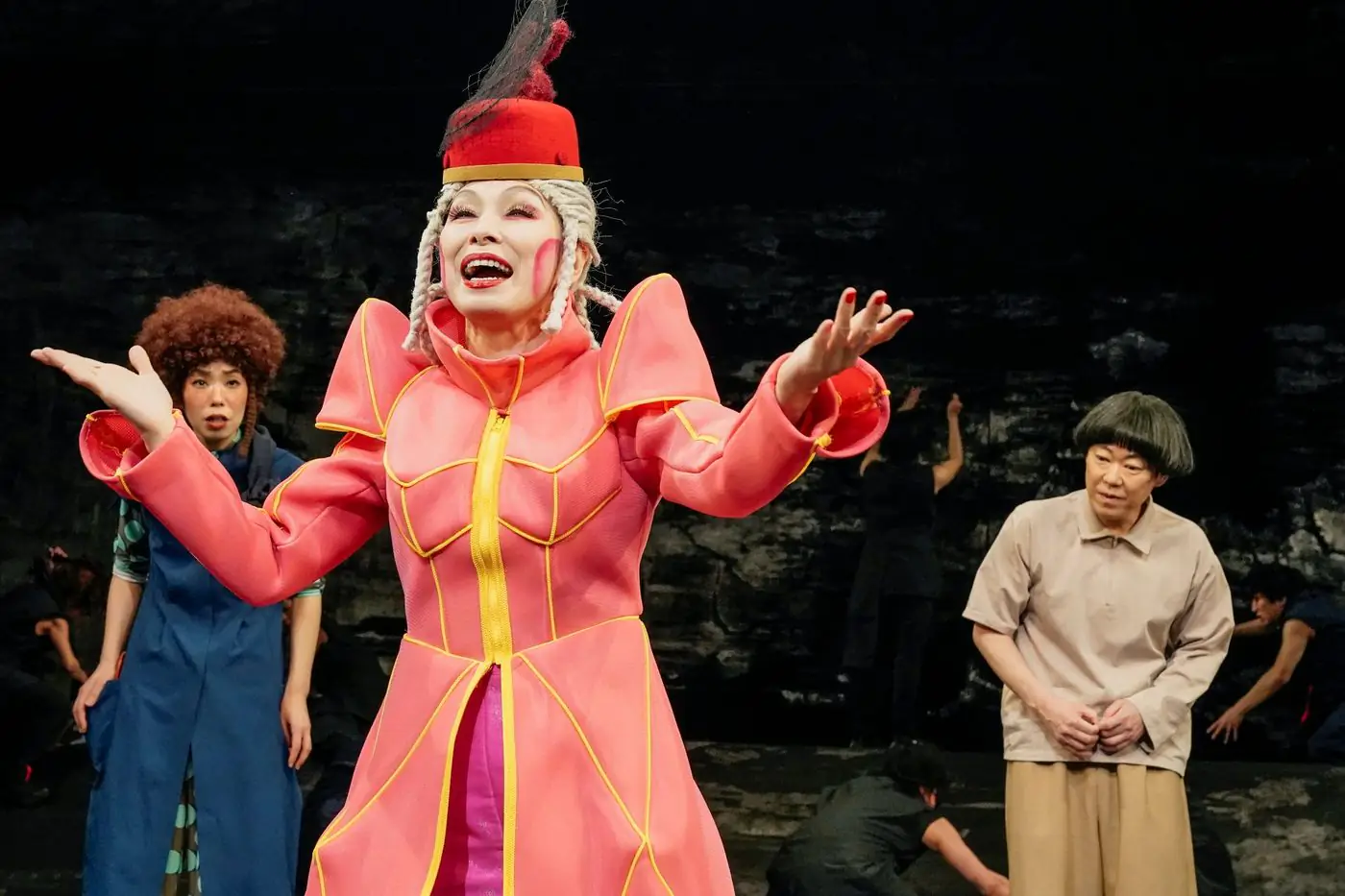
Noda’s signature wordplay drives much of the play. A sharp example is his pun on the Japanese words for gene (idenshi) and angel (tenshi). Driven by this, the meaning of ‘angel’ shifts constantly throughout the story. It starts as Lucifer the fallen angel, transforms into a code name for lab mice, and finally stands for people with disabilities, where ‘angel disease’ becomes a metaphor for disability itself. Because these shifting meanings keep blurring the lines, the plot becomes hard to follow, leaving the audience somewhat lost in the complex narrative.
This confusion stands out most at the end of the play. HELP questions Professor Kyuri, who knows that her unborn child has a disability. Still, she chooses to have the baby without any hesitation. The show then ends with the whole ensemble using sign language. This moment is moving and beautiful, but it also causes some worry. By choosing such an overly romanticized ending, the play avoids the painful realities of caring for people with disabilities. It replaces a complex issue with a simple, sentimental image, which feels a bit concerning.
-320°F is at Sadler’s Wells Theatre, until 11 July.
Images and video courtesy of Noda・Map and Sadler's Wells.