Image by Mohammed Nateel
Review by: Blake Zhang
Rating: ★★★
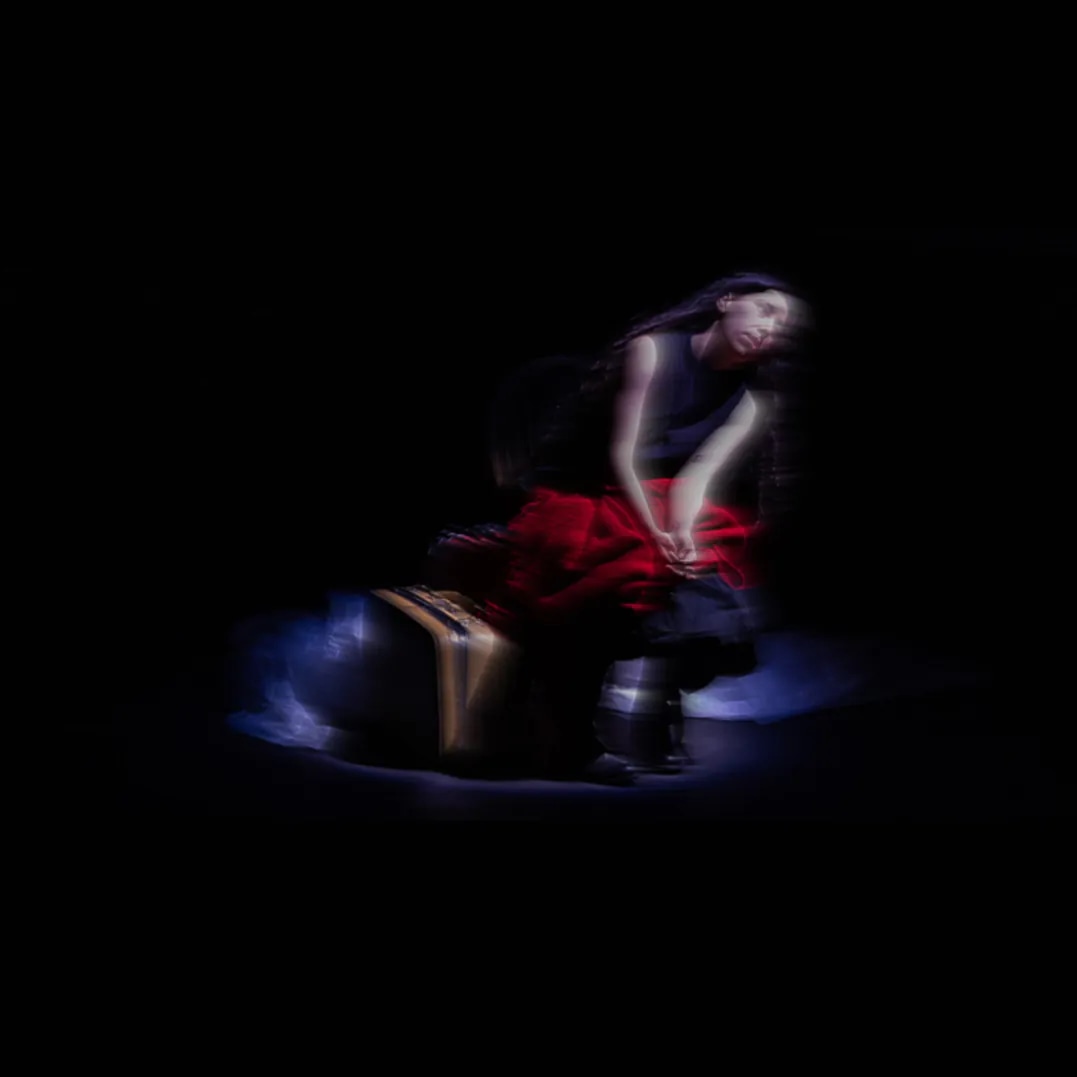
A woman lies inside a suitcase, her head resting on another. This is how Vestiges of a Dry Creek begins, with a simple image that hints at the journey ahead. Over the next 45 minutes, Montserrat Cuellar Mestas takes us to Jalisco, Mexico, in search of her grandparents and the family history that connects her to this place.
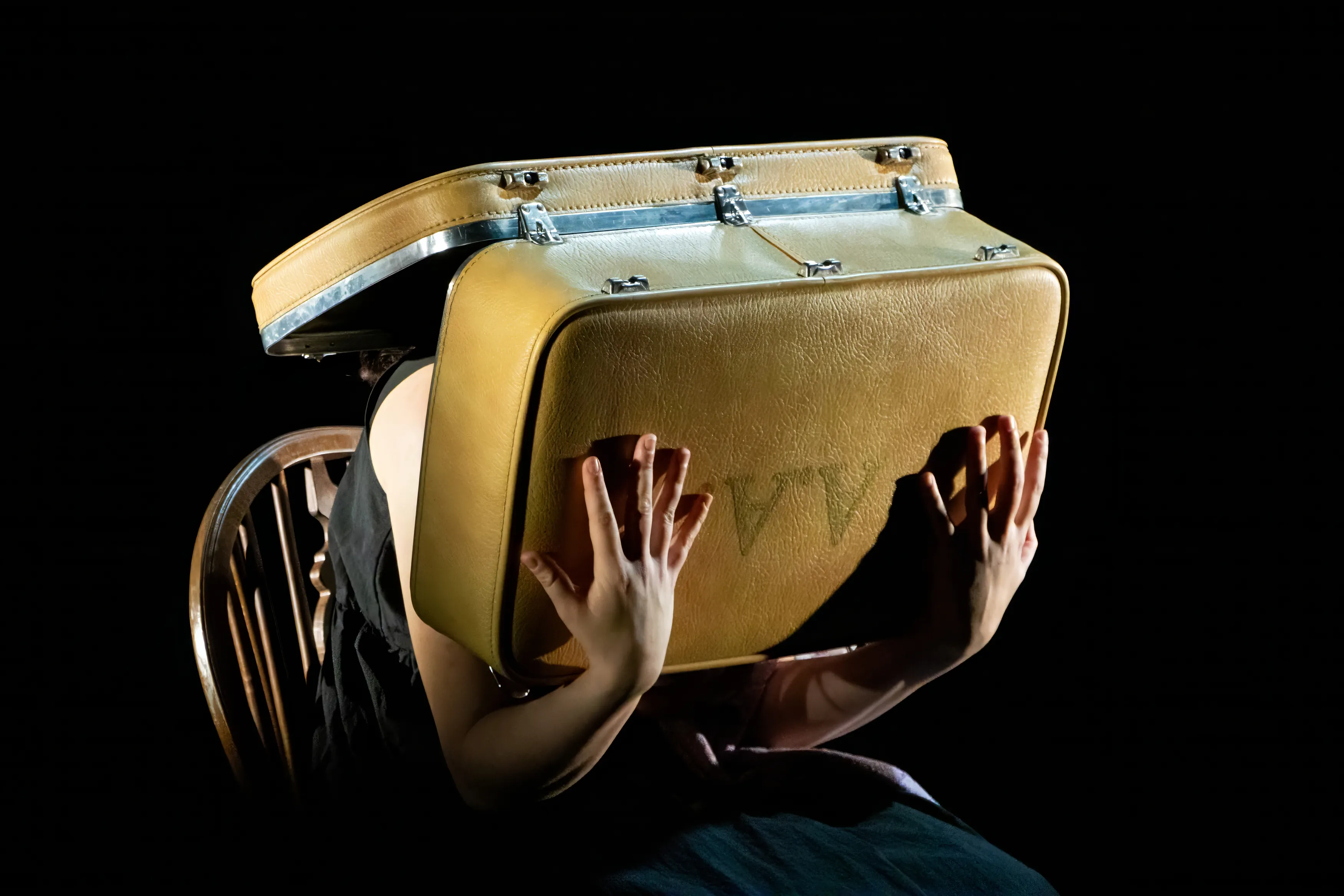
Image by Linda Carter
Created, directed and performed by Mestas, this solo show combines physical theatre, singing, documentary footage and poetic storytelling. There is no conventional plot to follow. Instead, the story emerges through fragments of memories, movement and rhythms, as though Mestas is piecing together what she knows of her family's past.
The suitcases provide a starting point, but it is Mestas's body and voice that carry much of the performance. Her movements shift between different rhythms and gestures, while the text comes in short, poetic passages. Sometimes an image or a movement is left to speak for itself, inviting us to make our own connections.
Music plays an important role, drawing on Mexican folk music. Mestas has a beautiful singing voice, and I particularly enjoyed the moments when she sang a cappella. Without accompaniment, her voice filled the space with a different kind of intensity. I found myself paying much closer attention to the words and the sound of her singing. These were some of the most affecting moments of the evening.
Alongside the live performance, documentary footage offers glimpses of her family and their lives. Seeing these images gives the story a more personal dimension, reminding us that the people she is searching for existed beyond the memories and stories that have survived. I found myself wanting to know more about them, especially as some appeared only briefly before the performance moved on.
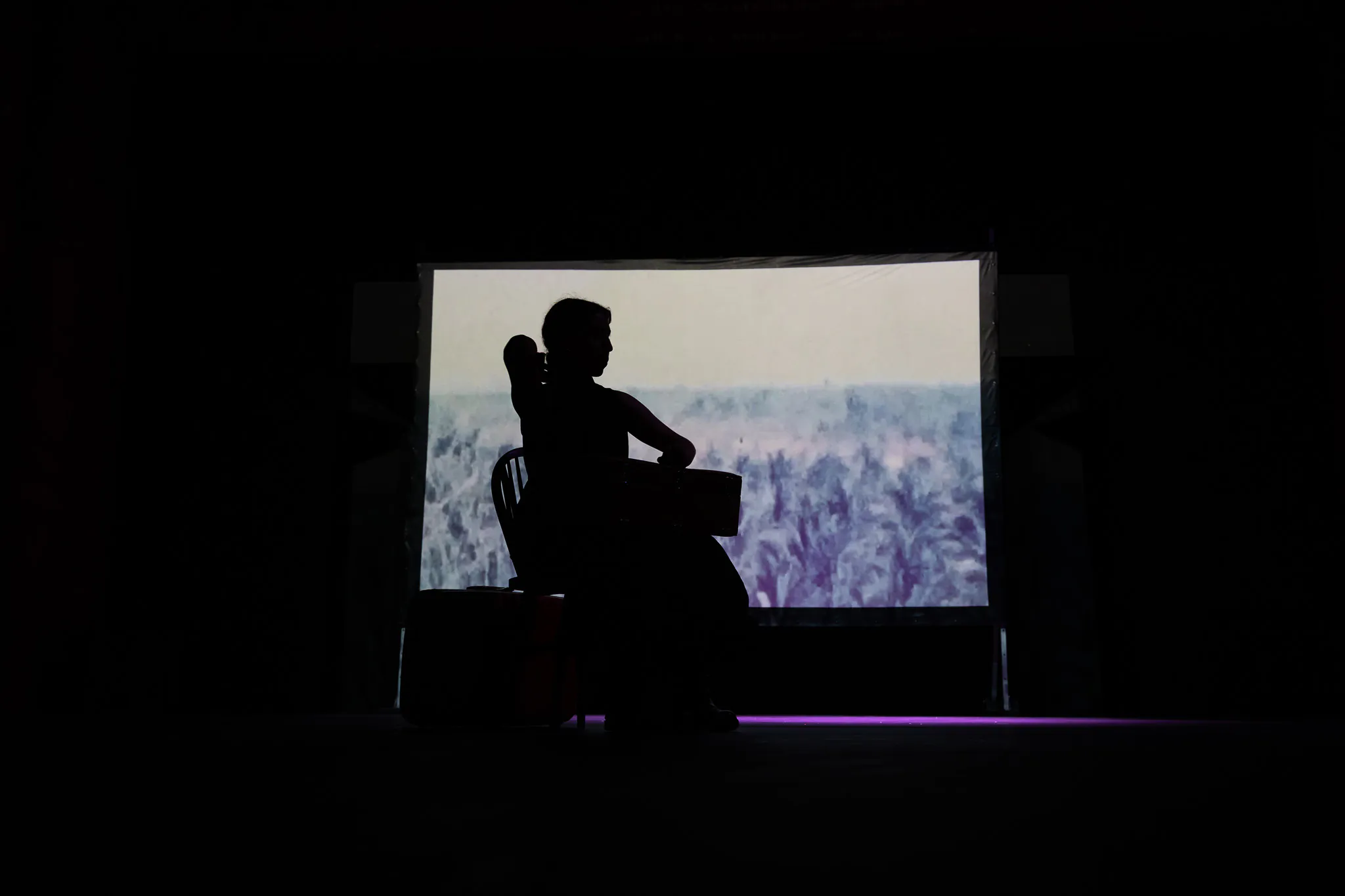
Image by Mohammed Nateel
The piece also reminded me of the short stories of Mexican writer Juan Rulfo. Perhaps it was the connection between landscape and memory, or the way the past seems to linger in the present. There is a similar poetic quality in Mestas's fragmented storytelling, where places and family histories become closely intertwined.
Yet this approach also has its limitations. At times, the succession of images, movements and poetic passages makes the story difficult to follow. Just as I began to connect with a particular memory, the performance would move on to something else. The atmosphere is often evocative, but I occasionally wished for a little more detail, or simply more time to absorb what I had just seen.
What I appreciated most was the sincerity of Mestas's performance. There is something moving about watching someone return to their family history through the things they have inherited, remembered or managed to recover. Her singing, in particular, gives the piece an intimacy that the more elaborate theatrical elements do not always achieve.
Vestiges of a Dry Creek is a personal and poetic exploration of family, memory and belonging. It left me with a few unanswered questions, but also some lovely moments.