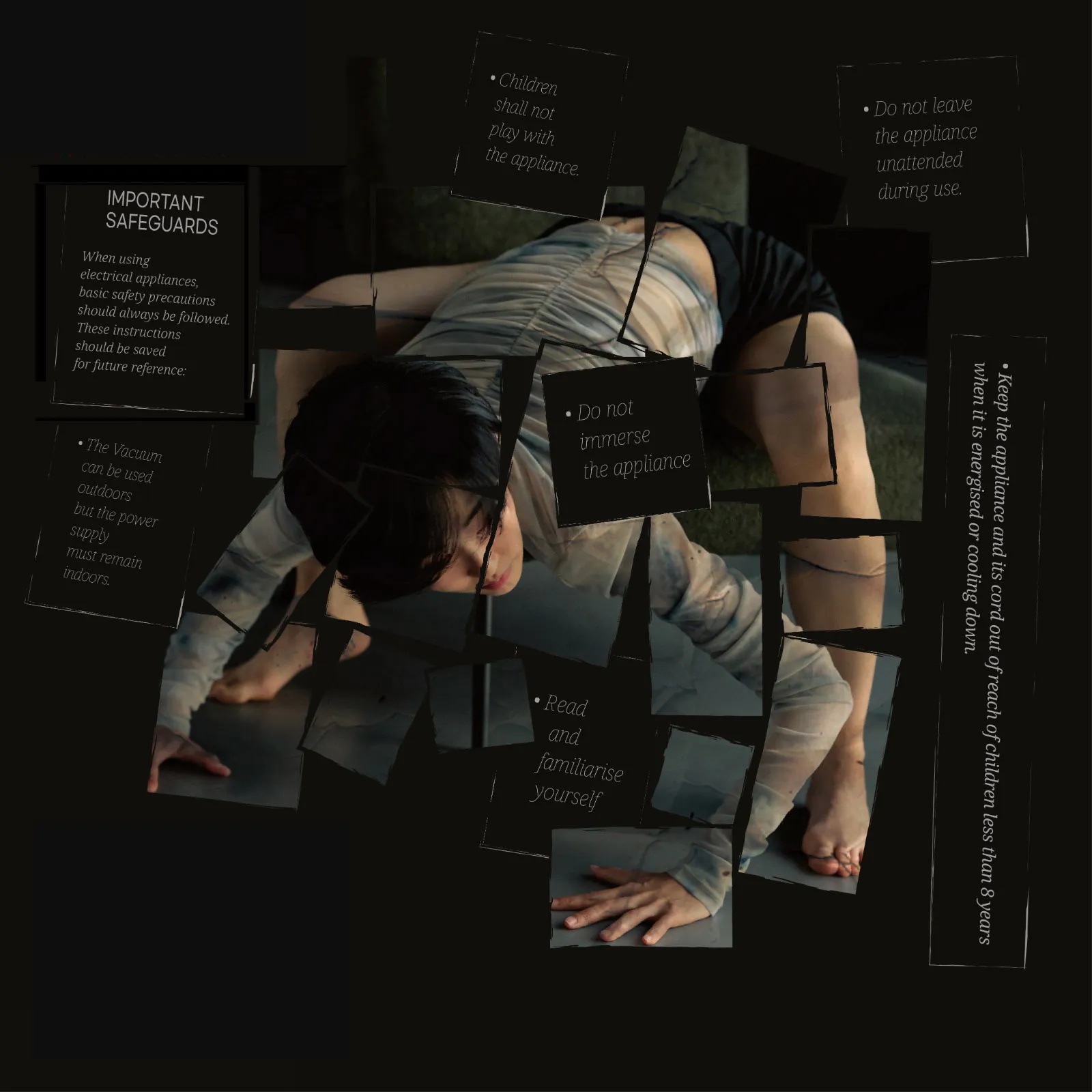
Image by KASSNA
Review by: Blake Zhang
Rating: ★★★★
User Manual for a Broken Machine begins with a Daewoo vacuum cleaner, made in Korea, that has stopped working. Someone opens its user manual to find out what went wrong. Somehow, this leads us into a story about growing up in South Korea, living through an economic crisis and eventually leaving the country.
Three performers share the stage: a musician, a reader and a mover. The reader recalls growing up with the Daewoo success story and the 1988 Seoul Olympics, when South Korea was celebrating its rapid development and looking towards the future. Then come the collapse of the Daewoo dream, the protests, and the International Monetary Fund crisis. As the vacuum cleaner struggles to function, the narrator also begins to burn out. Eventually, leaving the country seems like the only way forward.
Coming from another East Asian country, I found much of this surprisingly familiar. China, Japan and South Korea have different histories, but the language of national development, pride and individual sacrifice has a lot in common. The repeated references to being a ‘developing country’ made me smile. So did the idea that working hard and contributing to the nation, or even sacrificing for it, is not simply a personal choice but almost a duty. The country is a great machine, and each of us is expected to be a small cog, doing our part to keep it running.
The production uses video projections, live music, a live camera and even an AI character. At one point, the audience is invited to use their phones to interact with the AI. Miniature figures are used to recreate scenes of protest, complete with violence and bloodshed. Seeing these events played out with tiny models is both unsettling and oddly fascinating.
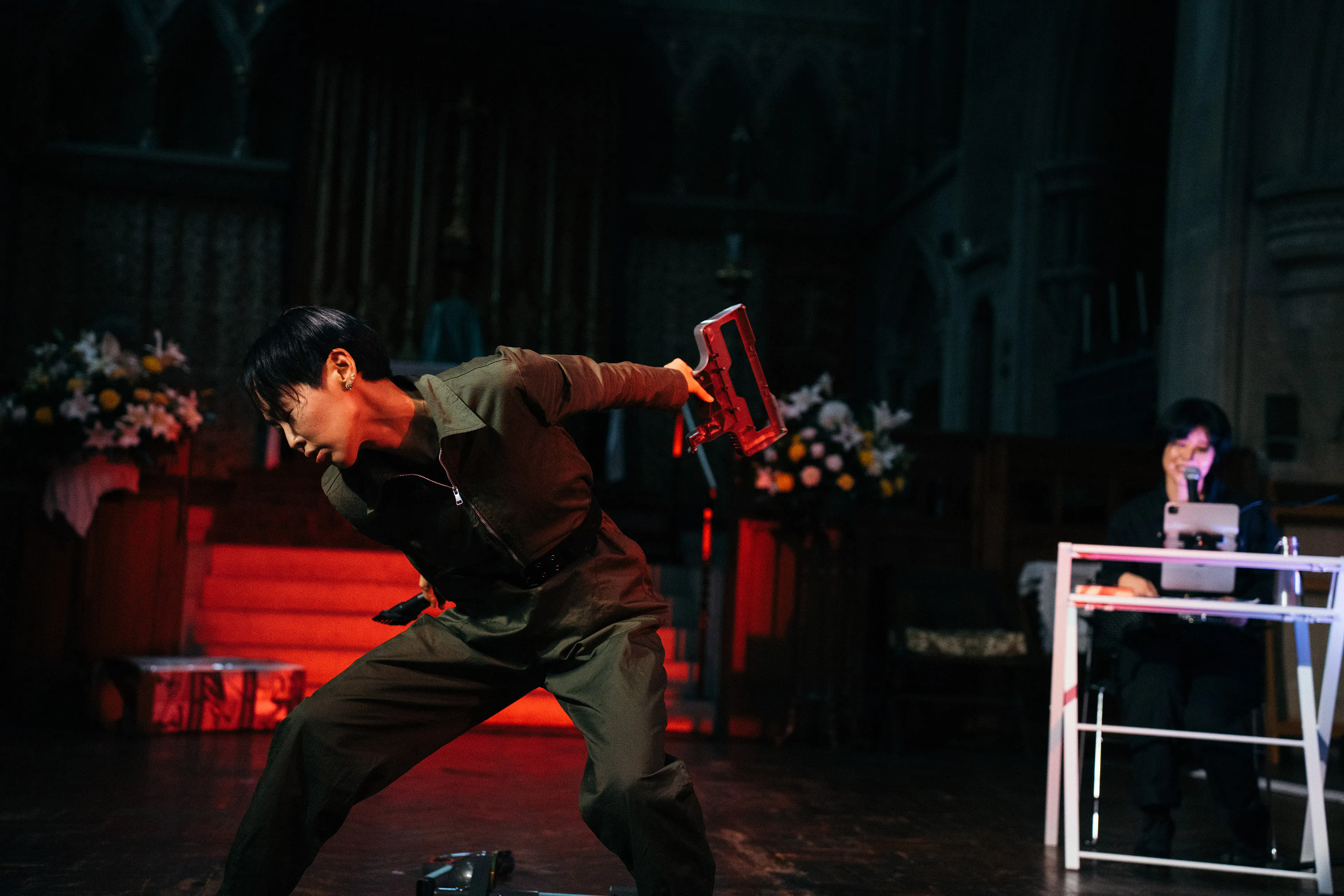
The vacuum cleaner itself is perhaps the most versatile prop on stage. Once taken apart, its components become all sorts of things, from a piece of external body armour to a helicopter. I enjoyed watching the performers find new uses for these objects. It reminded me of Jaha Koo's Cuckoo, which also uses household machines to explore South Korea's recent history and the lives shaped by it.
The three performers have a good rhythm together. The mover's physical work is precise and powerful, but also light and playful, bringing some welcome humour to the stage. The reader has a soothing voice, shifting between different moods alongside the live music. There is a lot happening, but the transitions feel natural, and each performer has their own place in the storytelling.
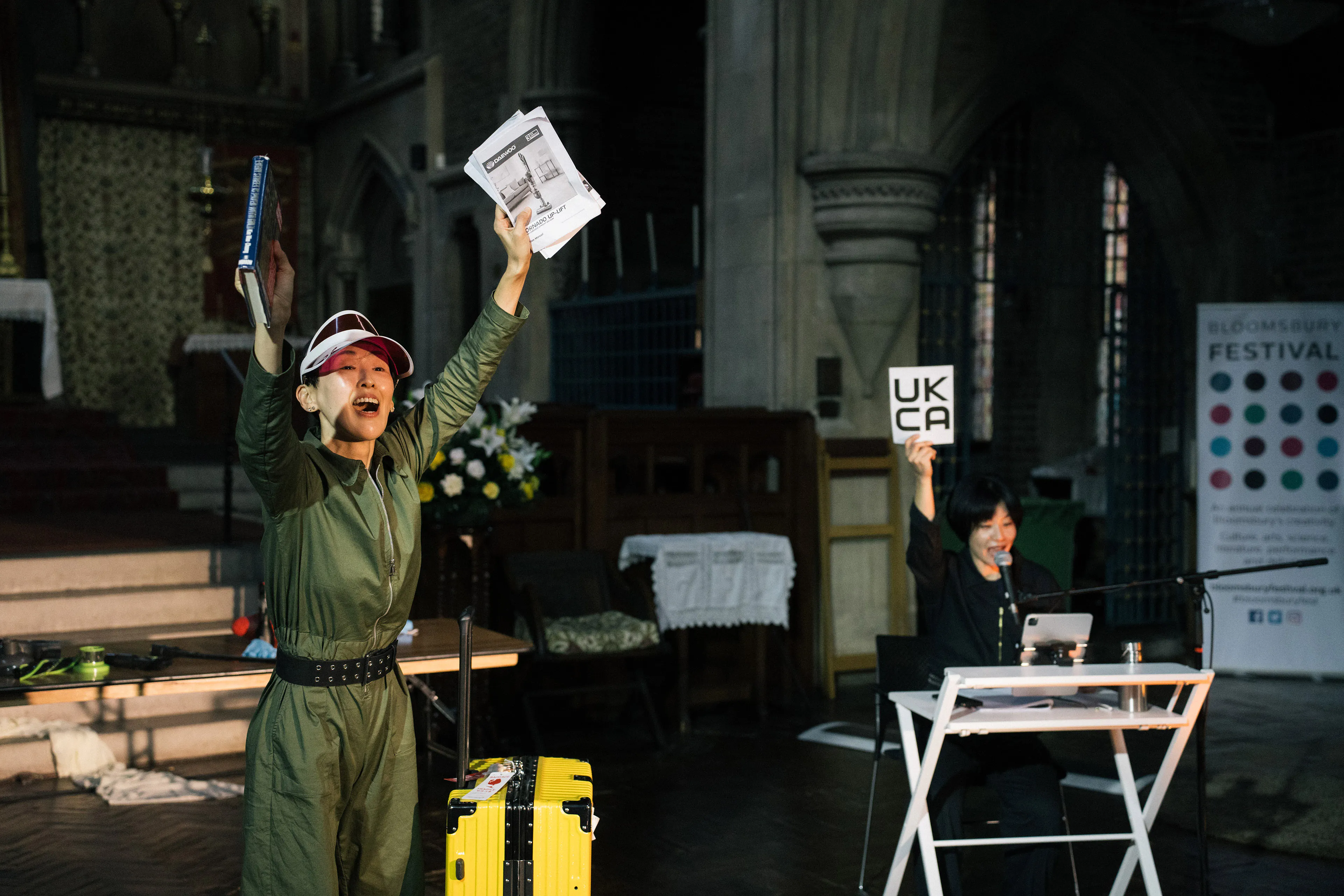
The section on migration was particularly close to home. To enter the UK, the vacuum cleaner needs UKCA certification, while the narrator has to prove that they are talented, useful and worthy of being allowed to stay. The parallel is funny, but also painfully familiar. After all that effort, finally getting permission to stay might sound like a happy ending.
But of course, it is not.
Rejection follows rejection. Whether the narrator tries to fit into British society or share something from their own culture, neither seems to work. Eventually, they shut themselves inside a bin. It is an absurd but strangely moving image of someone who has run out of ways to make themselves acceptable.
Getting a visa does not mean the struggle is over. You are expected to stand out, but also fit in. Your cultural background is supposed to make you interesting, yet it does not necessarily make people more willing to accept you. I found myself laughing at some of these moments, perhaps because they felt a little too familiar.
By the end, I kept thinking about how the narrator had escaped from one system, only to find themselves inside another. Leaving South Korea meant leaving behind one set of expectations, but life in the UK brought a different set of rules and demands. The surroundings have changed, yet the struggle remains.
Perhaps the vacuum cleaner was never the only thing that needed a break.