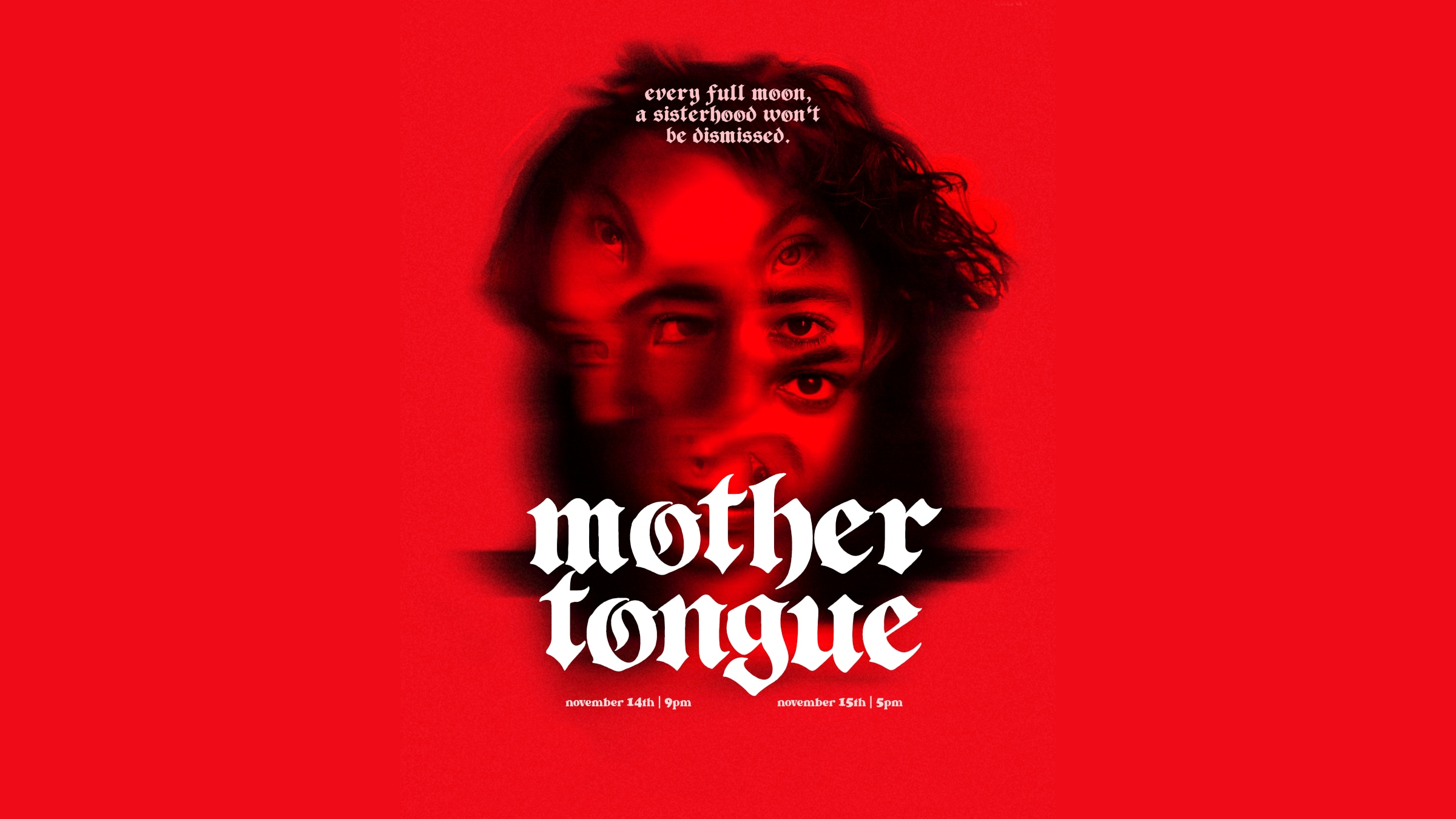
Image credit pending from the production team.
Review by: Blake Zhang
Rating: ★★★
Six performers make quite a large cast for a fringe production. Yet in Mother Tongue, they all share the same name: Jane Doe, a name often used to protect a woman's identity. It reminded me of the recent gang-rape allegations at Cornell University, where the woman who came forward was known as Jane Doe. Protesters supporting her held up signs reading “I Am Jane Doe”, turning an anonymous name into a powerful expression of solidarity.
Written and directed by Gabrielle Hofmann, Mother Tongue brings together stories passed down by mothers, told in six languages: Flemish Dutch, Spanish, Polish, Bosnian, Portuguese and Gaelic Irish. We encounter women in white, witches, banshees and other female figures who have been feared or demonised across cultures. Under the moonlight, they dance and gradually awaken, bringing these figures from their mothers' stories to life.
The production makes good use of The Space Theatre, a former church. Most of the action takes place on the stage at the front, but the performers also move into the central aisle. In one memorable scene, they become a crowd casually discussing a woman who is not there. What begins as harmless conversation soon turns into speculation, gossip and accusations. The scene feels uncomfortably close to the way rumours spread in everyday life and a woman's reputation can be shaped by people who barely know her.
Music is one of the highlights of the evening. Composed by Ciara Cogley, it brings together folk songs and contemporary sounds, with around half of the cast also playing instruments, including guitar, violin, drums and bass. The use of the violin in one particular scene is especially effective. Its sharp, insistent notes sound almost like a series of accusations, pushing a woman further and further back as she struggles to defend herself. The violin itself becomes the interrogator.
The harmonies are beautiful, especially when the performers sing together in different languages. I couldn't understand every word, but that hardly mattered. The voices carry warmth, anger and defiance, sometimes within the same song. For a show called Mother Tongue, I liked that the music could reach us without every word needing translation.
Two long pieces of white fabric are used throughout the performance, constantly changing their purpose. They become bedsheets being washed, skipping ropes for girls' games, a baby cradled in someone's arms, wedding dresses draped over the young women, or even a pair of wings. I enjoyed watching how easily the performers transformed them, moving between childhood games, domestic chores and other moments in women's lives.
There is a lot that Mother Tongue wants to talk about, from motherhood and childhood to violence, religion and the stories women inherit. Sometimes it feels like too much for one evening. Certain ideas are touched on briefly before the performance moves on, and I found myself wishing a few of them had been explored further.
Towards the end, the performers invite the audience to join them in saying the names of women whose stories have been forgotten, distorted or erased. After spending the evening watching six women who all share the name Jane Doe, this invitation feels particularly meaningful. These women have been turned into witches, monsters or anonymous figures in stories told by others. Now, at least, we are asked to hear and breathe out their names.