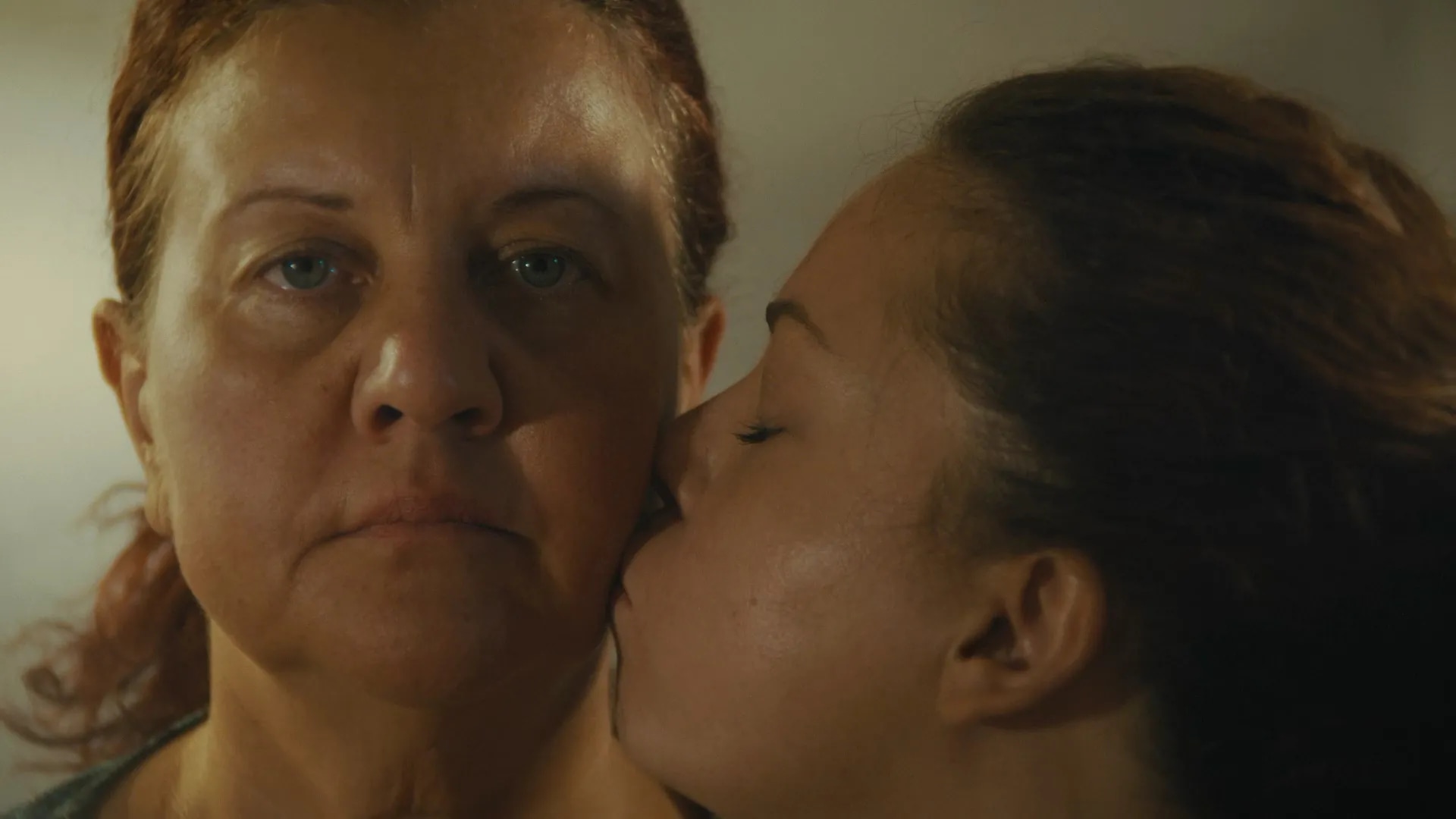
Image by TOPBRA productions
Review by: Blake Zhang
Rating: ★★
Part of this year's Voila! Festival, Mana, Mitera, Manoula, Mama is created and directed by Katerina Topali. The production explores a troubled mother-daughter relationship, where love, control and resentment become difficult to separate. Performed entirely in Greek without surtitles, it relies heavily on physical storytelling. To be fair, the changing power dynamic between the two characters is easy to follow. What is less clear is what drives their behaviour. We can see what they do to each other, but not always why.
Even before the performance begins, we hear sounds that seem to suggest war or civil unrest. The show then opens with a pregnant woman sitting at the side of the stage, her hair covering her face, surrounded by deep red light. She begins screaming, apparently giving birth. The screams are so loud and frightening that a child in the audience bursts into tears and has to leave.
It is quite an opening, although I wish the production had been more careful with its use of sound afterwards. The problem is not the screaming itself, but how little variation there is. When almost every emotional peak is expressed at the same volume, the performance loses its sense of build-up. After a while, the shouting becomes tiring rather than affecting.
The story moves through different stages of the mother and daughter's relationship. When the daughter is young, her mother controls where she goes and even demands every penny of change after sending her to the supermarket. Years later, when the mother is old and struggles to walk, the daughter turns the tables on her. She forces her mother to take medication and deliberately humiliates her. In one particularly provocative scene, she puts on lingerie and performs a sexually suggestive pole dance using her mother's walking frame.
The power has changed hands, but neither seems able to escape the same pattern of control and punishment.
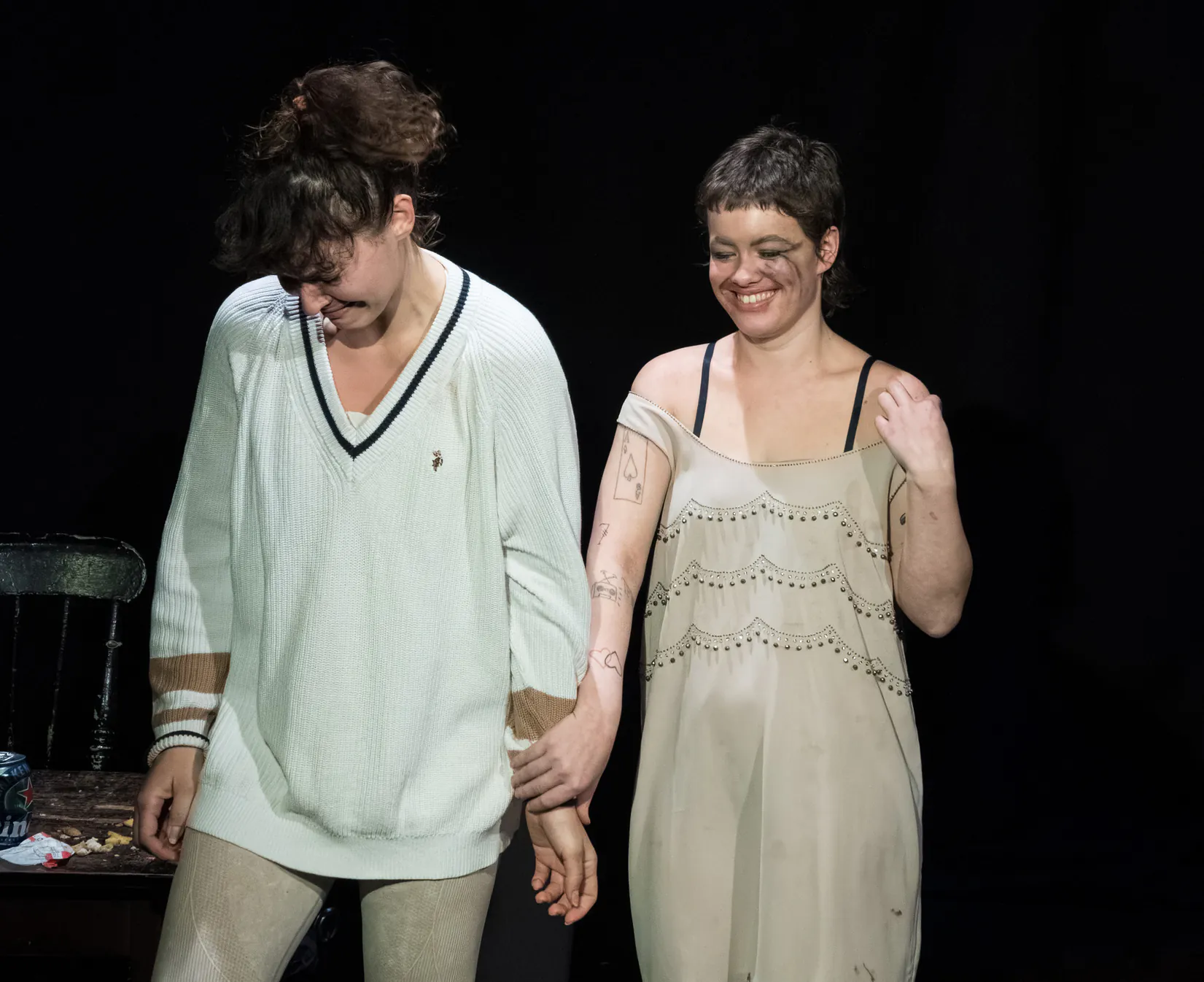
I kept thinking about the sounds we heard before the show. Could the mother have lived through a war or some other traumatic experience? If so, perhaps her need to control her daughter comes partly from fear, rather than simply a desire for power. And perhaps the daughter's behaviour later in life is her way of getting back at the person who controlled her for so long. These are possible explanations, but I wanted the production to give me a little more to work with.
Some of the quieter moments are actually the most interesting. When the daughter first appears, she is wearing only one shoe and hopping around looking for the other. Later, while she is out, her mother ties the two shoes together with a piece of string. I liked this small detail. The string could suggest their dependence on each other, or even remind us of the umbilical cord that once connected them.
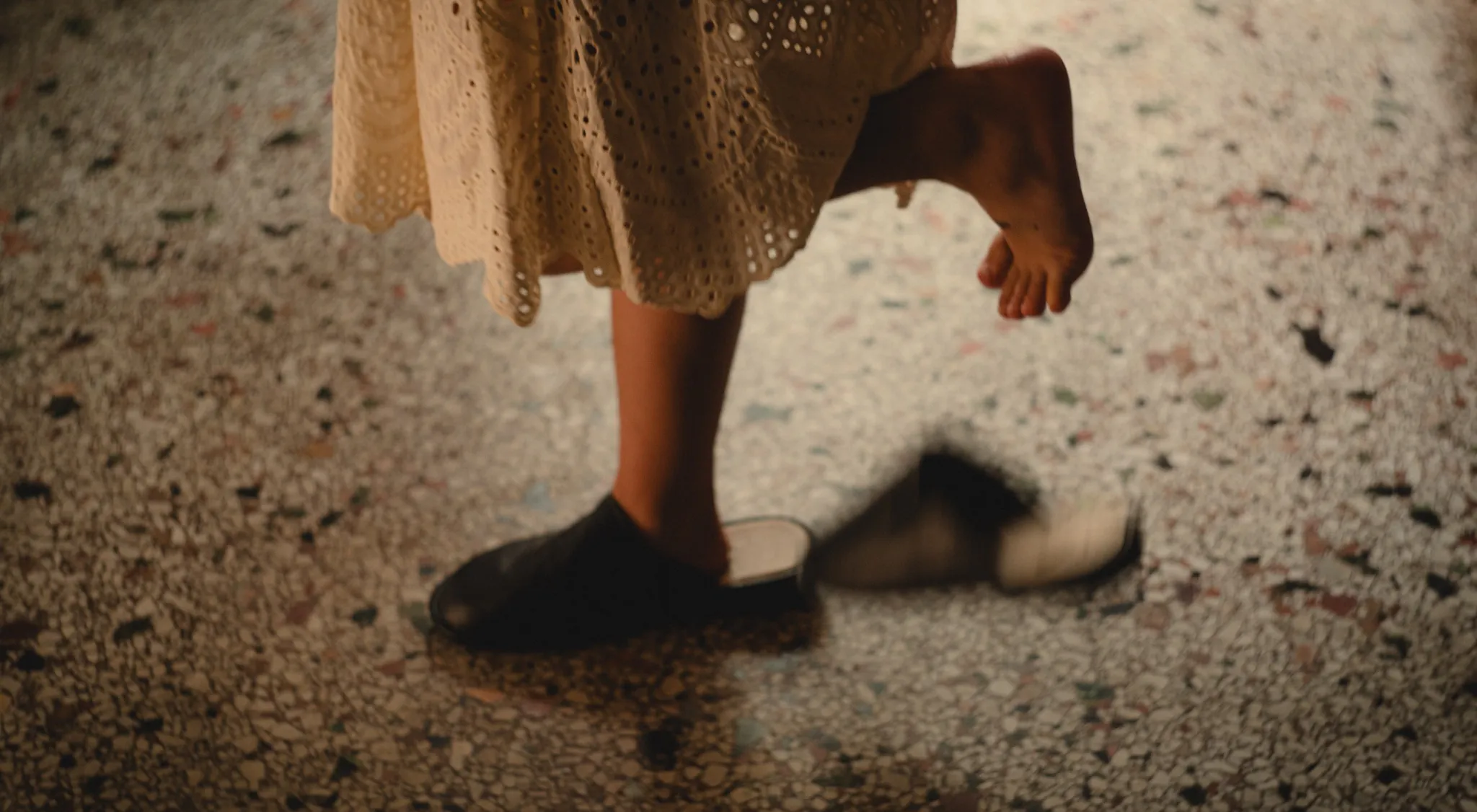
After dinner, the mother holds the shoes and dances alone before lying down beside her daughter. There is something rather touching, even poetic, about this moment. It is one of the few times their relationship is expressed through something other than conflict. I wish the production had returned to this image later, especially when the power between them begins to shift. It could have given their relationship another layer beyond the constant confrontations.
Visually, the show has some interesting ideas too. Large sheets of plastic cover parts of the space, hiding the balls of wool that the daughter seems particularly fond of, and separating the performance area from the audience. Deep red lighting appears repeatedly throughout the show. These choices help create an uneasy atmosphere.
What I found most frustrating was how little the relationship developed beyond the constant conflict. Almost everything we see is one character hurting the other, emotionally, psychologically or physically. There is very little tenderness between them, or even a brief moment when they seem to enjoy each other's company. Of course, a toxic relationship does not have to be loving. But if we are to understand why these two people remain so closely tied together, we need to see something beyond their cruelty.
A relationship needs both the push and the pull. Here, there is plenty of pushing, but very little pulling. After a while, I found myself getting tired of watching them hurt each other. Each time I thought I might begin to connect with one of them, another confrontation came along.
I do not mind theatre that makes me uncomfortable. Sometimes that is exactly what it needs to do. But I want that discomfort to lead somewhere. Mana, Mitera, Manoula, Mama has an interesting subject and a few memorable images, particularly when it allows itself to be quieter. Yet the constant aggression leaves little space for us to get close to either character.
By the end, I understood that the mother and daughter had caused each other a great deal of pain. What I still struggled to understand was what kept them together, apart from that pain.