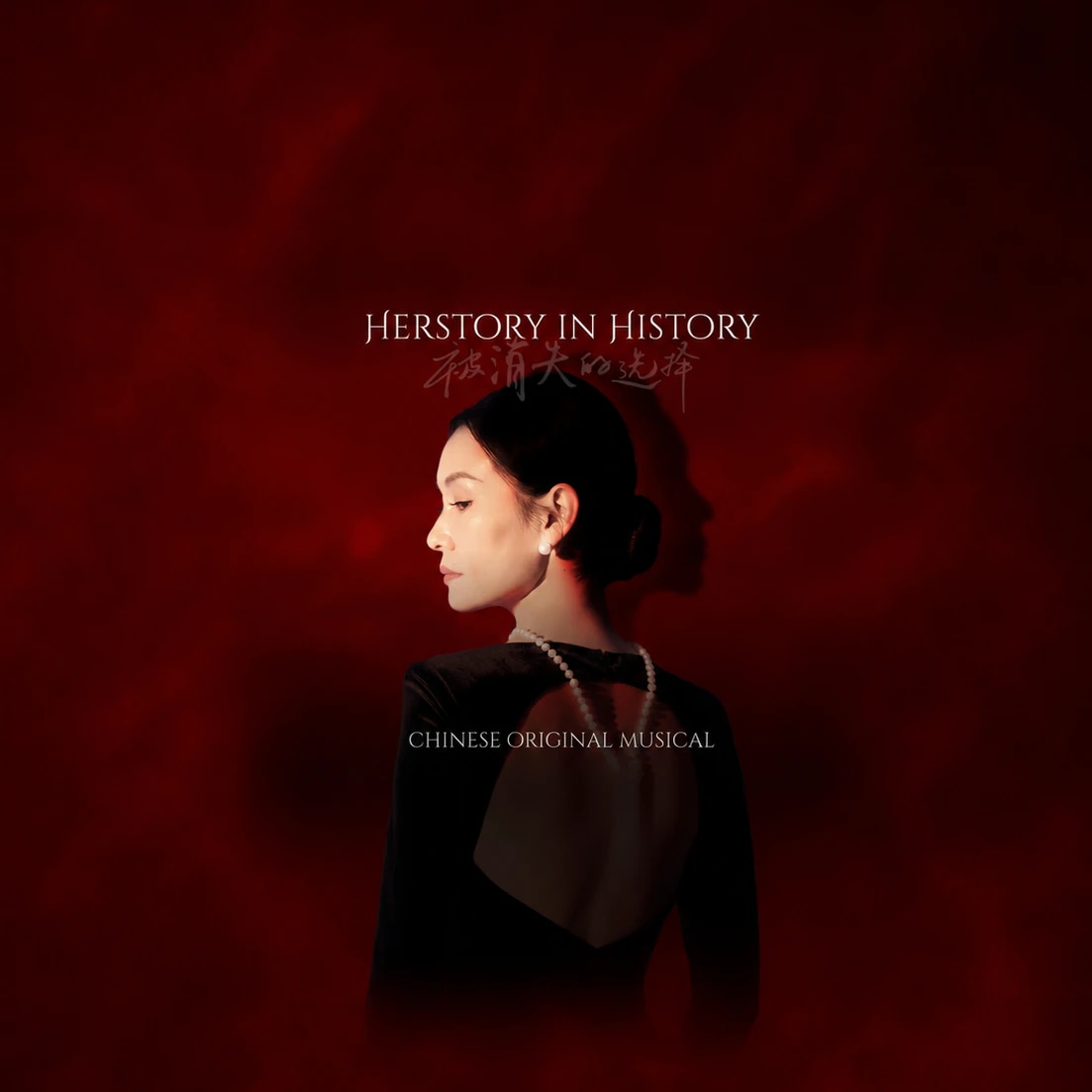
Image by Jade Cao / Xinhua
Review by: Blake Zhang
Rating: ★★★★
What happens when an actress starts questioning the character she has been playing? Herstory in History explores this question through Zhao Zhuang Ji, the mother in The Orphan of Zhao. After the performance, an audience member asks the actress whether her character really had no choice but to die. The question stays with her, and she starts to think about Zhao Zhuang Ji in a different way. Gradually, the historical character’s situation begins to overlap with her own.
Performed by Fiona Zhu at the studio upstairs at Rich Mix near Brick Lane, the show puts the historical character and a contemporary Chinese actress side by side. Zhao Zhuang Ji is facing a life where her choices seem very limited. The actress has her own difficulties too: the struggle of auditions, the experience of trying to build a career in Shanghai, and the frustration of being repeatedly given similar roles. One is a woman from ancient history. The other is a woman trying to find her own place in the theatre industry.
The production calls itself a ‘portrait musical’, and it is a useful description. It is a one-woman Chinese musical with English surtitles and many songs. When I first read the premise, it immediately reminded me of Six the musical, especially because both productions look at women who have been made less visible in history. But Herstory in History is not really trying to recover a forgotten historical woman. Zhao Zhuang Ji is more like a starting point. The show is much more interested in the question of choice, especially the choices women are given and the choices they are expected to make.
The story is also very personal. Many of the songs are about the actress’s own struggles, doubts and frustration, and it is clear that the character is closely connected to Zhu’s own experience. Zhu is a very strong musical theatre performer. Her singing is excellent, and her voice can be both powerful and delicate. The final song, ‘Herstory in History’, is particularly catchy and stayed in my head after the show. Some of the other lyrics feel a little awkward, and I sometimes found myself trying to understand the words rather than following the emotion of the song.
The live camera is another interesting part of the production. It brings Zhu’s face closer to us and makes her expressions much easier to see. This works especially well in several moments when she stands in front of the white silk hanging from above, a metaphor for Zhao Zhuang Ji’s death. The close-ups of her eyes are very effective. There is a lot happening in those looks without her needing to say anything.
At the same time, the white silk creates a small but noticeable problem. It sometimes blocks the subtitles projected at the top of the screen. Since this is a Chinese language musical with English surtitles, it can make some parts difficult to follow. The visual design is beautiful, but the practical side of the subtitles also needs to be considered.
The connection between Zhao Zhuang Ji and the actress is not always fully developed, but it gives Herstory in History its most interesting question: how much choice do women really have, and who gets to decide what those choices should be? More than anything, I hope this production brings great performers like Fiona Zhu to a wider UK audience.