Star rating: ★★★★
On February 13th 2024, I went to Glitch to watch a play called "Be Water." This title caught my attention because, in Chinese traditional culture, there is a famous Taoist saying: "The highest excellence is like that of water," which advises people to be like water. Seeing an artwork with East Asian cultural elements in London excited me; it was a significant reason that drew me to the theatre. I wanted to see what kind of sparks East Asian culture would ignite in London.
"Be Water" is a compelling drama that delves into the complexities of identity, cultural expectations, and resilience through the journey of Wanke, a 21-year-old Chinese international student in London. The script masterfully intertwines themes of adaptability, discrimination, and the pursuit of dreams against the backdrop of societal and personal challenges.
The narrative follows Wanke as she navigates the arduous path of an acting career, juxtaposing her personal experiences with the broader issues faced by international students and immigrants. Through her auditions, interactions, and reflections, we witness the struggle between conforming to external expectations and staying true to oneself. The title "Be Water" serves as a recurring motif, symbolizing the flexibility and strength required to overcome obstacles and prejudice.
One of the script's strengths is its nuanced portrayal of Wanke's internal conflict. Her determination to succeed in the acting world, despite the stereotypical roles and racial discrimination she faces, is inspiring. The dialogue is deep and thought-provoking, offering insights into the complexities of cultural identity and the experience of being an outsider. Wanke's journey is a testament to the resilience of the human spirit, her adaptability mirroring the water she aspires to embody.
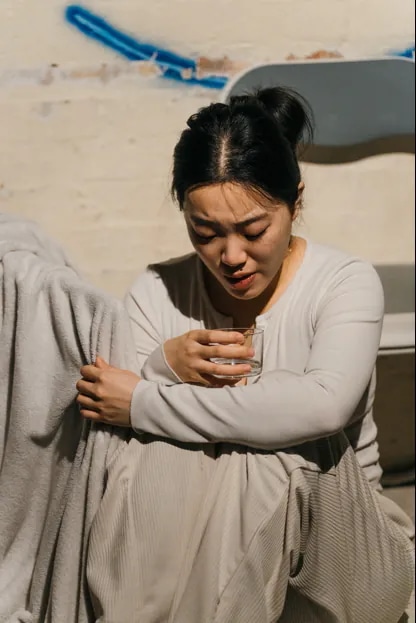
The script also addresses the rise of anti-Asian sentiment and violence, adding a layer of urgency and relevance to Wanke's story. Her experiences on the subway and the attack she suffers are particularly poignant, highlighting the physical and psychological toll of racism. These moments are handled with sensitivity and depth, underscoring the script's commitment to addressing contemporary social issues.
"Be Water" is not just a story about an aspiring actress; it's a reflection on the challenges of finding one's place in a world that often demands conformity at the expense of individuality. It explores the idea that true strength lies in the ability to be adaptable and resilient, like water, in the face of adversity.
The script's ending is both powerful and hopeful, with Wanke standing as a symbol of resistance and change. Her monologue at the premiere is a call to action, urging a stand against racism and a celebration of diversity and inclusion. This moment encapsulates the essence of the drama: the belief that change is possible, and that by coming together, we can create a more accepting and compassionate world.
Overall, "Be Water" is a beautifully written, emotionally resonant drama that speaks to the heart of contemporary societal issues. It is a reminder of the power of art to inspire change and the importance of staying true to oneself in the pursuit of one's dreams.
The collaboration between Director Ya Lucia Kang, Assistant Director Xiaowen Xu, and actor Xingchen Liu on "Be Water" was notably effective, presenting a sincere and engaging performance that beautifully unfolded on a visually striking, pure white stage. Director Ya Lucia Kang's clear vision and Xiaowen Xu's supportive role brought a level of polish and coherence to the production, while Xingchen Liu's portrayal was heartfelt and genuine, connecting with the audience through a nuanced performance. Their collective effort to integrate East Asian cultural elements into the London theater scene was commendable, showcasing their dedication and respect for the source material. This work stands out for its creativity and thoughtful execution, reflecting a promising potential in the world of theater.